- Jul 29, 2026
- 606
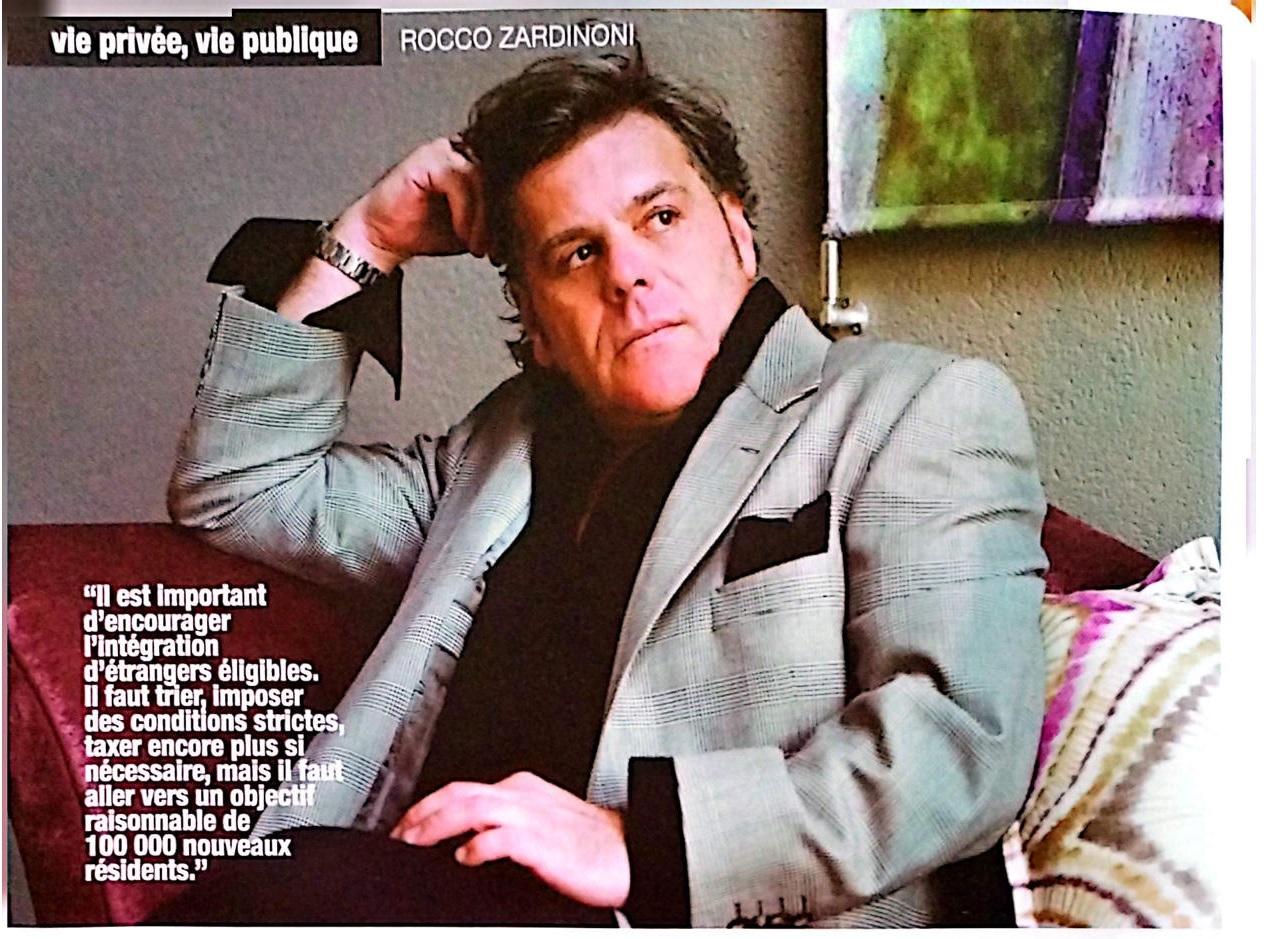
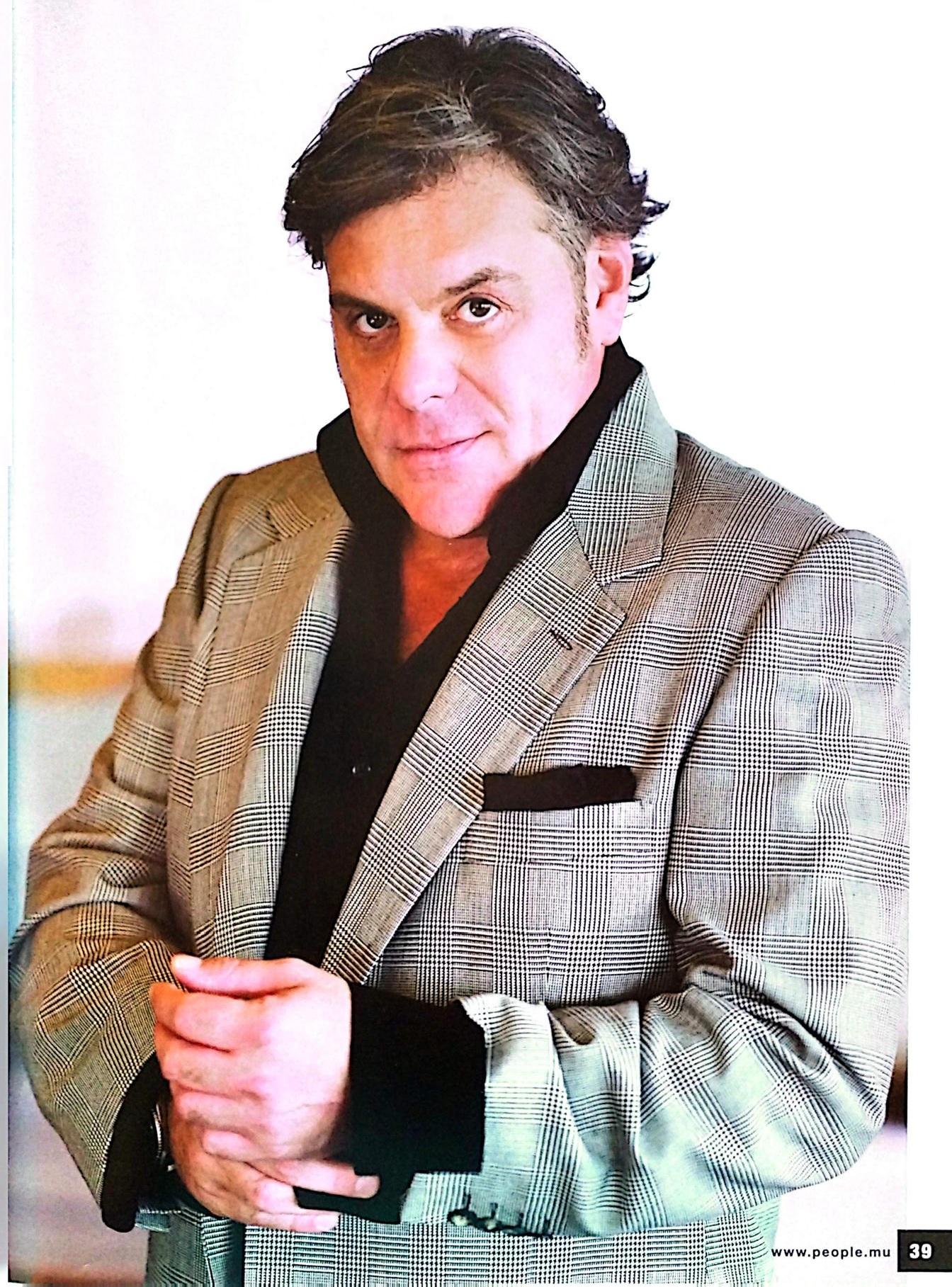
He weighs every word. He insists on commas and full stops. His sentences are not enough if they merely make sense — they must embody who he is. Such is Rocco Zardinoni.
An Italian-born businessman who has lived in Mauritius for thirty-four years, he heads Property Mauritius and Assist Invest Mauritius. In his first-floor office in a building in Pointe-aux-Canonniers — elegant, meticulously ordered, yet sober enough to put visitors immediately at ease — the Venetian accent has never left him. When he speaks of his life, his path and his business, the words still sing. His French, however, remains impeccable — in tone, in vocabulary, in agreement.
On the wall, still prominently displayed, hangs an interview with a former Minister of Commerce. The headline has not aged a day: “Foreigners believe they can do anything in Mauritius.” Rocco Zardinoni strives, in his own way, to relay that message — with respect, yet without naivety.
The choice of a country
It was in 1992 that he first set foot on the island, at the request of his uncle Virginio Palmarin, owner of the Palladium. At the time it was the unmissable destination of Mauritian nightlife: nightclub, casino and restaurant. Rocco was twenty-eight. “My uncle had asked me to come and help rethink his commercial strategy. It was meant to last a few months. I ended up unpacking for good.”
He fell in love with Mauritius in the same way one falls in love with a person—without quite knowing why. “I thought I was more drawn to the mountains in winter, to big cities. The sea and the sun were not exactly my natural companions. But circumstances brought me here, and I chose to stay.”
Under his management, the Palladium in Trianon transformed the island’s nightlife. Every Friday, several hundred night-goers would gather there. It was the era of U2, Depeche Mode, and INXS. “We went beyond what the clientele expected. We went against the current — to catch attention, to surprise. It was a permanent spectacle, an enormous creative undertaking.” At 150 rupees a ticket — an unusual price for the time — the venue generated substantial revenue that allowed investment in human resources. A team of fifteen people worked solely on public relations.
Today Rocco looks back on that period with distance and clarity. “It was a fashion phenomenon. Nowadays people are invited by text or social media, the door is opened, a drink is poured, and radio music is played. And that is where it ends. It is a theater without a director, without emotion, where the actors wait for a show that will never take place.”
The Palladium above all enabled him to integrate more quickly than many other foreigners. “In vino veritas. It is when someone is relaxed that you learn more about them. After one or two drinks, tongues loosen — people become more sincere, more genuine.”
From sales to mediation
Rocco could have been a lawyer. He studied law at the University of Bologna. One year remained to complete the degree. “I followed my heart and interrupted my studies. I threw myself into various exciting and dynamic commercial ventures that suited my profile and the story of my life far better. Sales then imposed themselves as an obvious path. Yet I must say that my legal training serves me every single day.”
He did not become a real-estate agent by chance. “It is a profession that must be learned.” At the Chamber of Commerce and Industry of Venice, his native city, he sat a rigorous 150-hour examination. “A house is not a trivial matter. It is often the investment of a lifetime. It requires sensitivity and care. In Europe it is a recognized and certified competence.”
In 2001 he opened Property Mauritius in Pointe-aux-Canonniers . In 2011, confronted with the growing complexity of regulations applying to foreigners, he created Assist Invest Mauritius — a Port Louis-based structure of professionals and lawyers of which he is Managing Director. Today, at sixty-two, he continues to lead both entities.
His clientele is roughly 60 % Mauritian and 40 % foreign. Among the landmark projects are the marketing of the 241 villas at Port-Chambly and the near-total sale of the 62 plots of Morcellement Alexandra in Pointe-aux-Biches.
“This is my profession… yet I remain sincere in the way I act, faithful to my professional ethics. I would be incapable of selling a project I do not like or in which I do not believe. I worry more about my clients’ money than about my own. Good deals are made by two parties. A proper mediating agent should always ensure that.”
He has found in Natacha Goorye an executive assistant who allows him to delegate and who adds a further layer of professionalism and genuine care to the agency.
The requirement of integration
When the conversation turns to foreign investment, Rocco Zardinoni does not settle for conventional phrases. He goes into detail — sometimes too technical for some, yet he does not yield.
“A precise offer is made to foreigners who wish to invest here. That offer corresponds to an obligation of corporate integration. It must be followed, not manipulated. It indicates the commercial and legal path established for them in the interpretation of the spirit of Mauritian law. Many foreigners, on their first visit to our offices, give the impression of possessing some ancestral priority dictated more by their poor commercial habit of fiscal deviation — typically European — than by any appreciation of the regulations governing openness to foreigners.”
He insists this country is governed by well-established laws. The government increasingly demonstrates a reactive capacity by subtly amending certain provisions, thereby improving the balances of residential, professional and, soon, cultural integration.
“Once again, and throughout the history of every civilisation, the integrative element can only be respect. I am certain that any restriction aimed at harmonising this integration will one day be appreciated by new residents of good faith.”
On the domestic market his view remains clear-eyed. “As far as exports are concerned, the indicators are green — that is a fact — yet the benefit does not reach the population directly. The internal market is asphyxiated; people struggle to make ends meet. Several entrepreneurs are turning abroad. That is concerning. At the same time social relations are deteriorating. There is a great deal of violence and intolerance. It is the sign of a malaise.”
His conviction has not changed for more than a decade: Mauritius’s future depends on higher-quality foreign investment. “We must look reality in the face. Here there are more shopping centres than customers. The statistics are formal: 1.2 million inhabitants are not enough to drive the internal economy. We must encourage the integration of eligible foreigners. We must select, impose strict conditions, tax more heavily if necessary — but we must move towards a reasonable objective. What if we tried importing human beings rather than merchandise?”
The equation is deliberately simple. It does not claim to solve everything. It has the merit of being stated with sincerity and conviction.
Venice, roots and prejudices
He left Italy, yet he has not forgotten it. His roots remain tenacious. He describes himself as more Venetian than Italian. “We discovered that the Zardinoni family is one of the oldest in the city. Traces of it have been found dating back to the fifteenth century.”
He regrets the prejudices that still too often accompany the Italian expatriate. “It is a pity that we are reduced to pizza, the mafia and the mandolin. I dislike stereotypes. Italy has been the source of what is finest in the world: the arts, culture, philosophy, law, politics.”
Before settling in Mauritius, he had taken an active part in the cultural life of Venice. The city awarded him the title of Magnificent Prior. In the fifteenth century that distinction carried real weight. Today it is largely honorary. He does not make a great show of it, yet he does not hide his pride. “It is a great honour I shall never forget. In life, small things mark you forever. They are proof that you have left a trace somewhere.”
His parents died tragically in a car accident when he was only twelve. These distinctions, these achievements, these traces — he likes to think they are enough for his parents to be proud of him today.
Venice itself he now regards without illusion. “I would have liked to say that Venice is still the cradle of romantic culture, but that is no longer really the case. The city has lost its charm, its identity. Everything has become commercial. Every day the trains pour out a flood of backpack-carrying tourists who leave after eating a sandwich and drinking their Coca-Cola. They soil the city, respect nothing. Above all, they do not know how to love it.”
Loyalty and integrity
In Mauritius, Rocco Zardinoni has learned a particular lesson. “Loyalty and integrity are often misinterpreted here — frequently confused with fragility and naivety. This applies to clients, to interlocutors, and even to certain members of my staff whom I have treated as my own children.”
He has recentered his priorities. At sixty-two there is less space on his “hard drive” for personal pleasures. Too many responsibilities. They concern the expansion of his companies but also his contribution to the development of his adopted country.
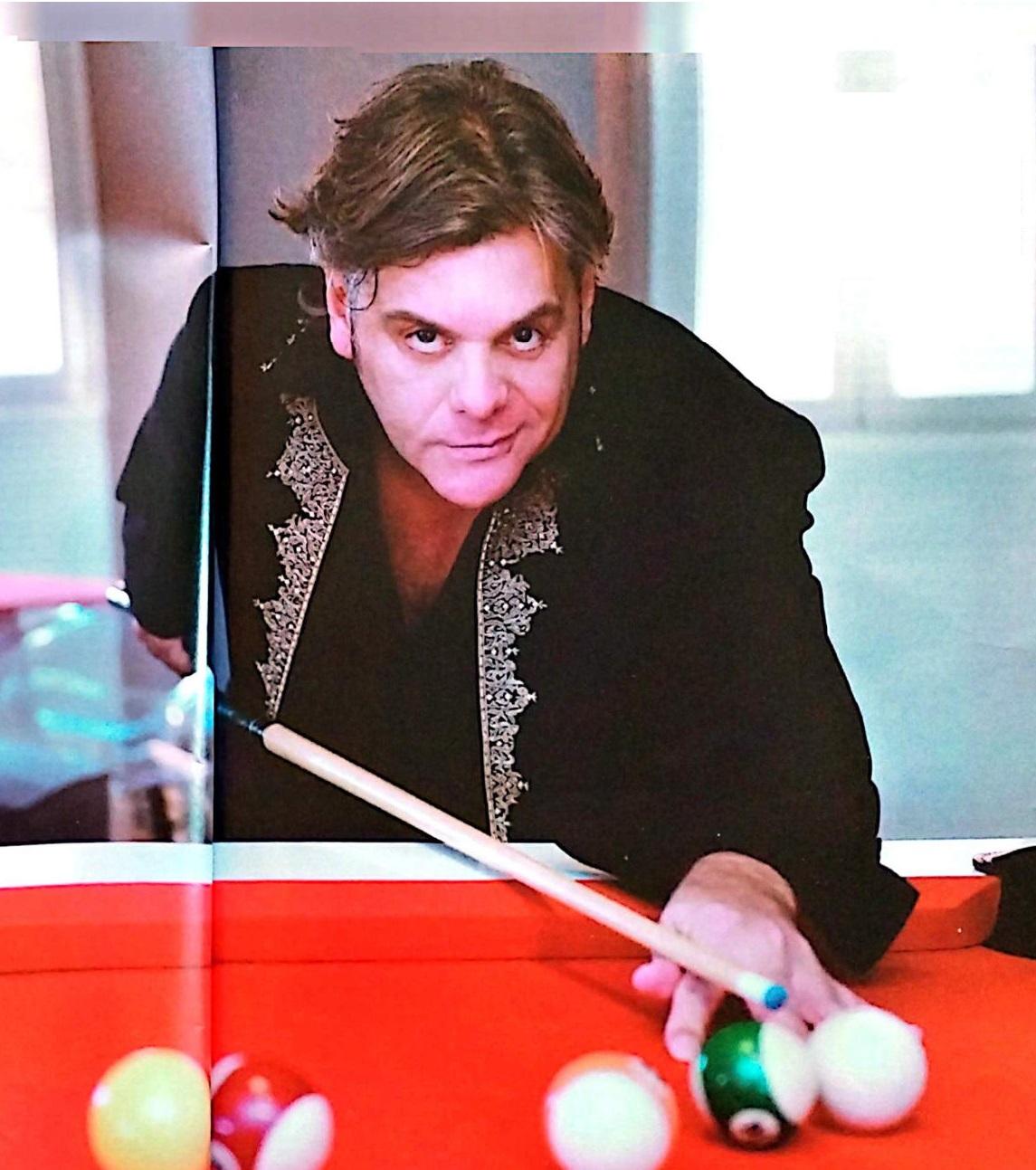
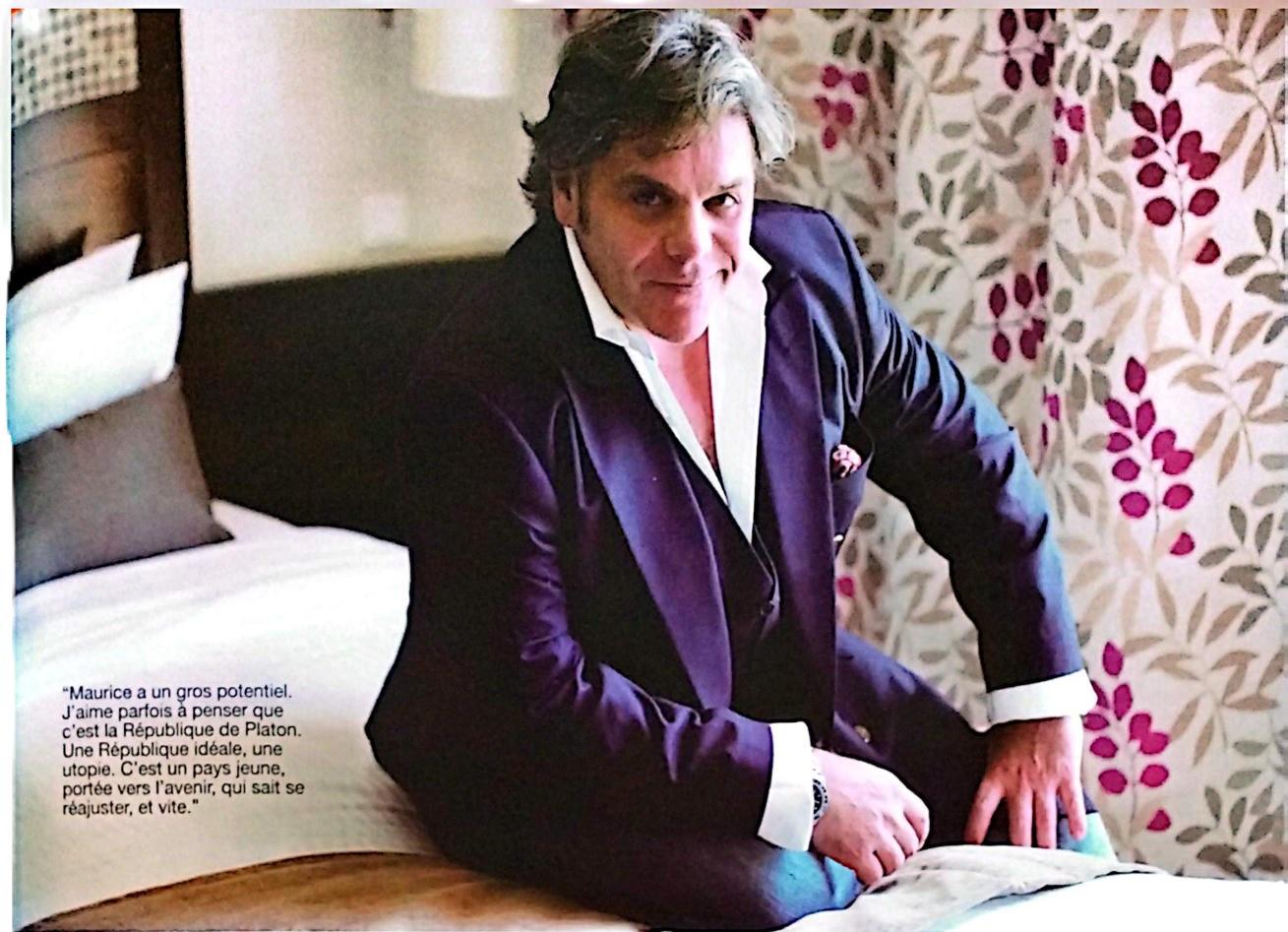
He sometimes likes to think of Mauritius as Plato’s Republic — an ideal republic, a utopia. “Mauritius is a young country, forward-looking, one that knows how to adjust — and quickly. The successive governments have had the merit of evolving the legal and legislative frameworks so that the country can adapt to new realities.”
The comparison with Italy is inevitable. “Back home we are prisoners of our lobbies and political ties which, in certain cases, bleed our healthiest resources dry.”
He chose Mauritius. Not merely for the privilege granted to foreign investors. In his case it goes far beyond that. It is a life choice.
And that choice, thirty-four years later, he still assumes every day—comma after comma, full stop after full stop.
Frequently Asked Questions
Who is Rocco Zardinoni?
Rocco Zardinoni is an Italo-Mauritian real estate professional and founder of Property Mauritius (2001) and Assist Invest Mauritius. Based in Mauritius since 1992, trained in law in Bologna and certified as a real-estate agent in Venice, he is known for his ethical standards and rigorous legal approach.
How long has he been practising in Mauritius?
Since 1992. He first managed the Palladium in Trianon before founding Property Mauritius in 2001 in Pointe-aux-Canonniers.
What is his philosophy in real estate?
Never to sell a project in which he does not believe. To protect the client’s capital as carefully as his own. To treat every transaction as mediation rather than a mere sale.
What is his position on foreign investment in Mauritius?
He advocates the qualitative and strictly regulated integration of eligible foreigners, in keeping with the spirit of Mauritian law, in order to support the domestic economy without damaging the social fabric.
What are the landmark projects of Property Mauritius?
The marketing of the 241 villas at Port-Chambly and the near-complete sale of the 62 plots of Morcellement Alexandra in Pointe-aux-Biches, among others.
Source: Magazine People Avril 2014
Popular Categories
Popular Posts